How do you maintain your circular saw blades?
To ensure a clean cut and extend the life of your blades, regular maintenance is essential. Find out why and how to maintain your blades, as well as tips for optimizing their performance.


Publié le 5 March 2026
Carbide is at the heart of today's global industrial challenges.
A strategic raw material, dependent on international markets and subject to major fluctuations, it has become a key element in cost and supply management.
At Caleyron Industries, we offer you a structured solution for the collection and recycling of end-of-life solid carbide blades and cutting tools.
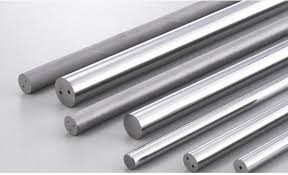
Tungsten carbide, often referred to simply as carbide, is one of the most widely used materials in the industry for the manufacture of high-performance cutting tools.
It consists mainly of :
This mixture forms what is known as sintered carbide, obtained by powder metallurgy.
The result is a material with exceptional properties:
These characteristics make it an indispensable material for all industrial operations requiring precision, productivity and long tool life.
Tungsten is considered a critical raw material in many industrial economies.
Global production is highly concentrated in certain regions of the world, making supply chains sensitive to market fluctuations and geopolitical tensions.
Global demand is growing steadily due to its use in :
This combination of relative scarcity and high industrial demand explains the high value of carbide.
Compared with high-speed steels (HSS), carbide offers :
This enables manufacturers to :
This is why carbide is now widely preferred for intensive machining applications.
Carbide is used in a wide range of industrial sectors, whenever an operation requires cutting, machining or wear resistance.
In the mechanical engineering and precision machining industries, it enables efficient machining of demanding materials such as aerospace alloys, alloy steels, stainless steels and titanium.
In this field, the precision and strength of carbide are essential to maintain very tight tolerances.
In aerospace and high-tech industries, the materials used are often difficult to machine.
Carbide is indispensable for working titanium alloys, superalloys and certain composite materials.
These applications demand: extreme precision, perfect dimensional stability, high temperature resistance
Carbide tools meet these constraints while ensuring productivity compatible with industrial requirements.
In most cases, end-of-life tools :
Yet the carbide in these tools retains its high material value even after use.
A used solid carbide blade is no ordinary waste: it's a recyclable resource.
Carbide recycling follows a rigorous industrial process:
Collecte des outils usagés
We're talking about an industrial circular economy.
Caleyron Industries is working on a simple solution that will enable our customers to centralize the management and recycling of their used carbide blades.
By entrusting us with your used blades, you benefit from integrated industrial recycling, directly linked to our expertise in the manufacture and management of cutting tools.
This allows :
Rather than simply managing metal waste, it's about technically upgrading your tools.
In many workshops, used carbide blades often end up :
To simplify this process, Caleyron Industries offers to integrate the recycling of used carbide blades directly into the tool purchasing cycle. When you order new blades or cutting tools, you can return your end-of-life tools to us so that they can be directed to specialized recycling channels. The recovered material can then be recycled, notably in the form of acredit note on your next orders.
This approach has several advantages:
By centralizing this process with your tool manufacturer, you benefit from a single point of contact for the entire life cycle of your cutting tools: manufacture, use, resharpening and recycling.
At a time when CSR policies are playing an increasingly important role in supply chains, this approach is becoming a real lever for environmental and industrial performance.
Caleyron Industries is currently setting up a collection and recycling solution for its customers' used carbide blades.
The aim is to offer a simple, structured and transparent approach, enabling manufacturers to recycle their end-of-life tools as part of a circular economy.
Caleyron Industries, a family business specializing in the manufacture of cutting tools in solid carbide and HSS high-speed steel, is directly concerned by the issues surrounding materials.
Our expertise in manufacturing, hobbing and regrinding gives us a global vision of the tool life cycle.
That's why we offer a structured solution of :
Caleyron Industries is committed to this approach, and will soon be supporting its customers in the implementation of a simple, transparent and high-performance solution.
Because the future of the cutting tool also depends on mastery of its raw material.