

Coatings and surface treatments
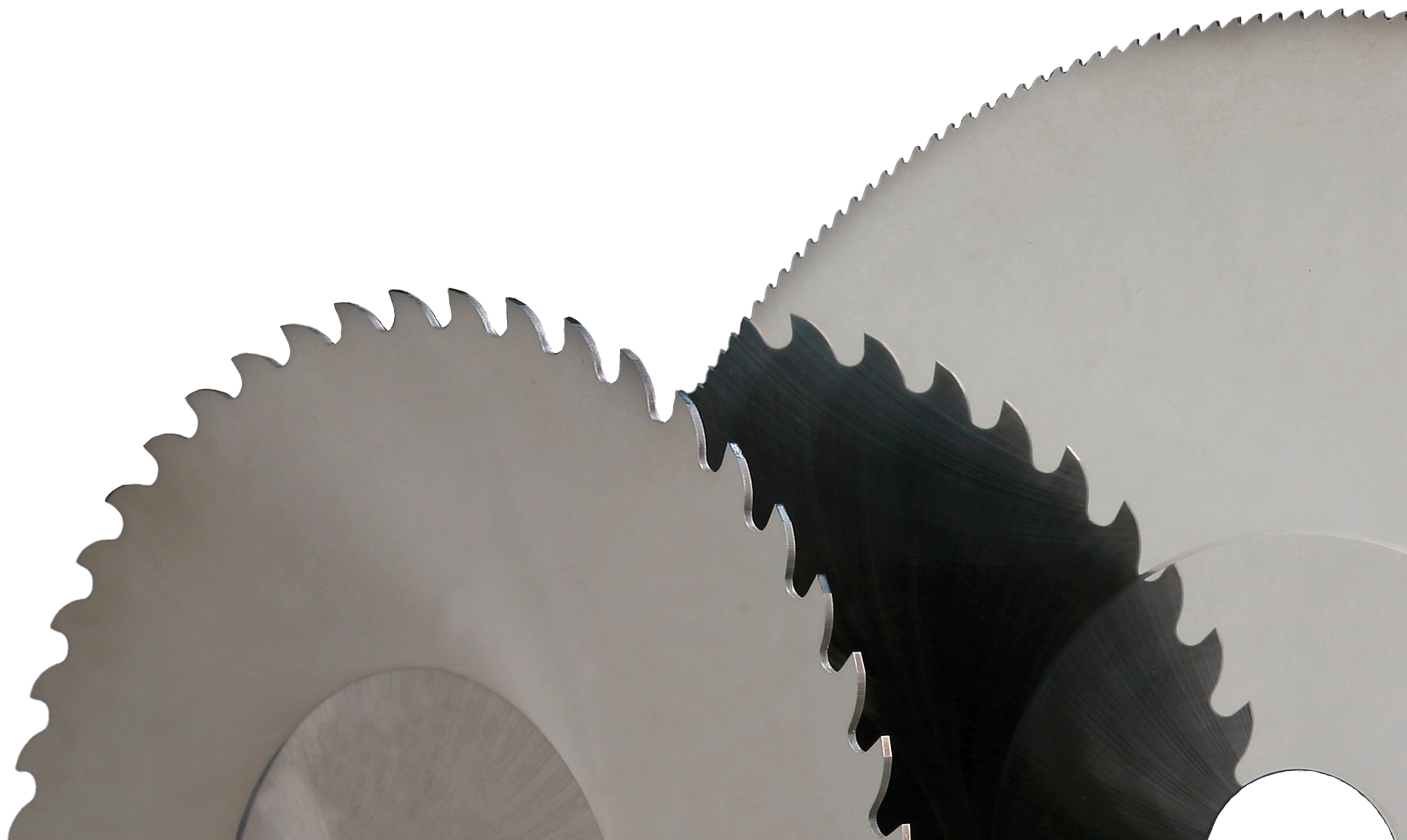
Coatings and surface treatments on circular saw blades and circular knives are essential for improving the performance and quality of cutting tools.
Performance, durability and quality : the coating makes the difference
Each coating is selected according to the specific requirements of the application and the material to be machined.
The benefits of surface coating
Increased tool life
Reduced tool changes, machine downtime and tool inventories.
Quality improvement
- Improved surface quality
- Compliance with dimensional tolerances
- Reduced production scrap
Productivity improvement
- Optimized cutting conditions
- High-speed machining possible
- Dry machining for certain applications
- Reduced heat build-up and material adhesion to the tool
| Solution | Color | Machined material | Maximum temperature | Advantages |
|---|---|---|---|---|
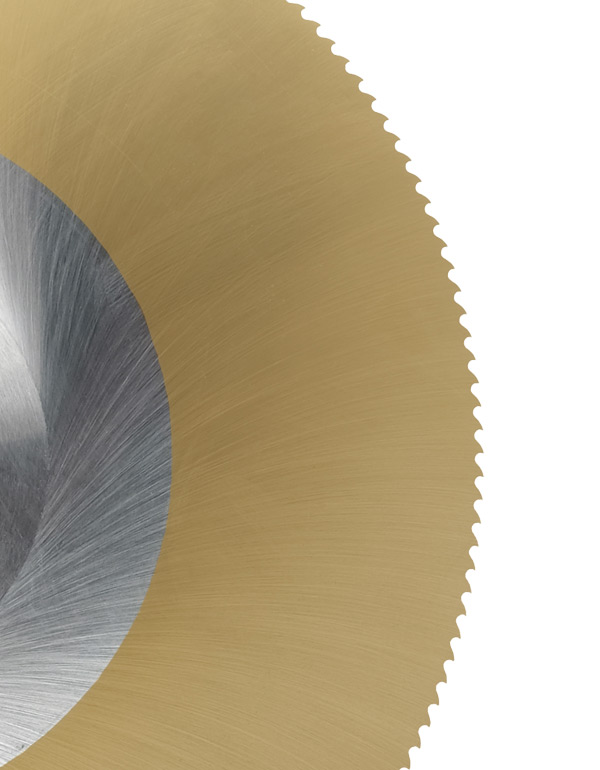
| GOLD | Gold | General-purpose. For standard cutting and grooving of soft metals, plastics, wood, and non-abrasive materials. | ~600°C | Versatile coating, good wear resistance, extends blade life |
| RAINBOW | Blue/Gray/Pink | Cutting and forming of non-ferrous metals and sticky materials: aluminum, copper, brass. Well-suited for grooving and fine cutting operations. | ~400–500°C | Harder than TiN, reduces material sticking. Very good abrasion resistance. |
| VOLCAN | Dark gray | Stainless steel, cast iron, difficult-to-machine tool steels and high-alloy steels, high-strength hardened steels | ~1000°C | For demanding conditions. Ideal for both wet and dry machining. Long tool life under heavy-duty cutting conditions. |
| COBRA | Bronze | High-performance machining of extremely hard materials: hardened steels, stainless steel, titanium, and high-strength alloys. Primarily carbide cutting edges. | ~1000°C | Exceptional resistance to wear and oxidation Resistant to thermal stress Superior results in hard machining Maximum tool precision |
| PERFORM | Bright gray | Steels, cast irons, and high-temperature alloys | ~1100°C | Excellent thermal and oxidation resistance |
Frequently Asked Questions
What types of coatings are available and in which situations are they used?
We offer several PVD (Physical Vapor Deposition) coatings designed to improve the performance and service life of cutting tools:
AlCrN (Aluminium Chromium Nitride)
A coating designed for severe cutting conditions involving high temperatures and strong abrasion. It provides excellent thermal stability and very good oxidation resistance.
TiN (Titanium Nitride)
A versatile coating for general-purpose applications. It is suitable for HSS and carbide blades used to cut standard materials such as mild steels, plastics, wood, and certain non-ferrous metals.
TiCN (Titanium Carbonitride)
A coating that is harder than TiN, particularly effective for non-ferrous metals such as aluminium, copper, or brass. It reduces material adhesion and improves abrasion resistance.
TiAlN (Titanium Aluminium Nitride)
Ideal for machining alloy steels, stainless steels, and materials generating high heat. This coating offers excellent thermal resistance and performs well at high cutting speeds.
AlTiSiN (Aluminium Titanium Silicon Nitride)
A high-performance multilayer coating designed for very demanding applications and difficult materials such as hardened steels, stainless steels, and high-strength alloys. It is particularly suitable for solid carbide tools.
How do surface coatings help improve the quality of machined parts?
Surface coatings improve cutting performance by:
- reducing the coefficient of friction between the tool and the material,
- limiting heat generation and tool wear,
- reducing material adhesion and micro-chipping.
These improvements help reduce scrap and rework in production, achieve cleaner and more consistent surface finishes, and ensure better compliance with dimensional tolerances.
Comment les revêtements de surface contribuent-ils à améliorer la qualité des pièces usinées ?
Un outil revêtu offre plusieurs avantages :
- Durée de vie plus longue grâce à une meilleure résistance à l’usure
- Meilleure résistance à la chaleur lors des coupes intensives
- Réduction du frottement et de l’adhérence matière
- Stabilité des performances dans le temps
Dans de nombreuses applications industrielles, l’utilisation d’un revêtement permet également d’augmenter la productivité et d’espacer les opérations d’affûtage.
How do surface coatings help improve the quality of machined parts?
A coated tool offers several advantages:
- Longer tool life thanks to improved wear resistance
- Better heat resistance during intensive cutting operations
- Reduced friction and material adhesion
- More consistent performance over time
In many industrial applications, the use of coatings also helps increase productivity and extend the intervals between sharpening operations..
What criteria should be considered when evaluating the performance of surface coatings?
The performance of a coating is generally evaluated based on several criteria:
- Wear and abrasion resistance
- Thermal stability and oxidation resistance
- Hardness and adhesion of the coating to the tool
- Coefficient of friction
- Tool life in production
- Cutting quality and consistency of the produced parts
A high-performance coating helps extend the service life of the blades, reduce machine downtime, and improve the overall productivity of the machining process.
Does a coating change the dimensions of the circular saw blade?
No, the dimensional impact of a PVD coating is very small.
The thickness of a coating is generally between 1 and 5 microns (µm) depending on the type of treatment and the application.
This thickness is therefore negligible compared to the overall dimensions of the tool and does not affect the cutting geometry or the tolerances of the blade.
Coatings are designed to improve performance without altering the mechanical or dimensional characteristics of the tool.
Can a coated circular saw blade be resharpened?
Yes, a coated blade can be resharpened several times.
During the resharpening process, the coating layer is removed from the ground surfaces.
Depending on the application and the level of wear, it is possible to:
- resharpen the blade without applying a new coating, or
- reapply a new coating after sharpening in order to restore the tool’s original performance.
In many cases, the combination of resharpening and recoating can significantly extend the service life of the tool.
What is the service life of a PVD coating?
LaThe service life of a coating mainly depends on:
- the material being cut,
- the cutting conditions (cutting speed, feed rate, cooling),
- the type of coating used,
- and the tool geometry.
Under optimized conditions, a coating can increase tool life by 2 to 5 times compared with an uncoated tool.
However, actual performance varies depending on the application. This is why the choice of coating must always be adapted to the material being machined and the machining conditions.


Do you need reliable, long-lasting
cutting tools?
Advice on the type of blade to use, the ideal coating…
our experts are here to listen and advise you